
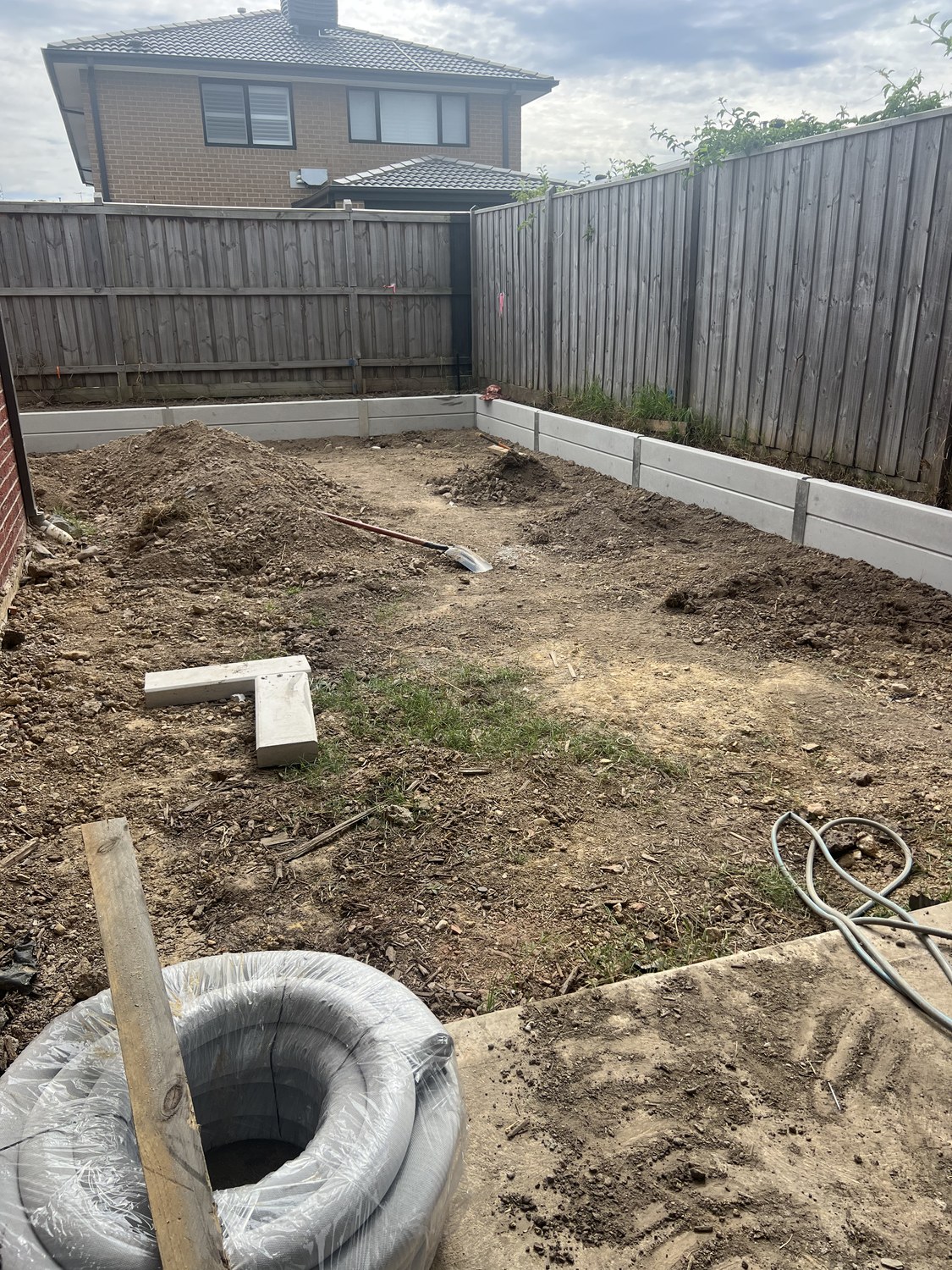
The ag pipe behind a retaining wall should discharge to a suitable outlet that carries water away from the wall. A stormwater point may suit, or there may be another suitable outlet on your property. Keep the discharge clear of the base of the wall and away from your neighbour's land.
What the outlet does
The outlet gives water collected behind the sleepers somewhere to go. Plan where the water will end up before settling on the route for the pipe.
Every wall ANKERMANN Landscape builds gets an ag pipe at the base, clean gravel backfill and geofabric, with the pipe run to a suitable outlet. Water can work its way through the gravel to the pipe, and the geofabric helps keep fine soil out of the drainage. Water building up behind a wall is one of the main reasons walls lean or fail. Our guide to why retaining walls fail explains what that movement can look like.
If you're looking over a quote for a wall, ask where the ag pipe will finish and how the water will get there. A path or driveway between the wall and a possible outlet can affect the route. It's worth sorting out with the wall layout, while there's still room to plan the trench around the rest of the job.
Why water at the toe can be a problem
Water spilling out at the toe can leave the soil around the post footings wet. The toe is the bottom of the wall on the low side, where you might see a pipe end or a strip of wet ground.
Look along the base after rain. On a slope, water can run along the wall and collect at the low end, so the boggy patch may be some distance from the pipe. A pipe end near a puddle is worth a closer look, especially if you can see water running out of it and sitting there. If the wall has other wet patches, take a photo that shows where those are in relation to the outlet.
On clay, water may soak away slowly and the soil at the base can stay soft. Our guide to Melbourne's clay soils explains how clay behaves when wet. For a newly built wall, see what to check on a new retaining wall for other things you can look for after rain.
Where the water can go
A suitable outlet might be a stormwater point or another outlet on the property that can take the flow away from the wall. The choice depends on the ground levels, the soil and the drainage already there.
A nearby stormwater point may look like the obvious place to finish, but the route has to suit the falls. If there's no suitable point close by, the pipe may need to run further.
If the water is going into the stormwater system, it helps to know where that system is allowed to leave your block. In Victoria this is usually called the legal point of discharge (LPOD), and your council can provide a report showing it for your property. Councils also set their own rules on what can go into their drains, so check with your council before a connection is planned.
Soakage may suit some sites. If the ground is clay or the proposed outlet is in a spot that already stays wet, the soil may take up the water too slowly. We'll confirm on site whether an outlet there makes sense. Where several parts of the yard get wet, it helps to look at the wall outlet alongside the rest of the drainage and site preparation. Our guide to water pooling in the backyard covers what to look for across the yard.
Drainage near a boundary and runoff above the wall
Keep wall drainage off your neighbour's land and direct surface runoff away from the backfill. The ag pipe handles water that works down through the soil behind the wall.
At a boundary, look past the point where the pipe ends. Water can still follow a fall across the boundary even if the pipe stops on your side. The route the water takes once it leaves the outlet matters as much as where the pipe finishes. From the outlet, look downhill for a low spot where the flow could collect or turn back towards the wall.
Above the wall, look for a downpipe emptying onto the ground or paving that slopes towards the sleepers. A sloping garden bed can also send runoff towards the back of the wall. Where the falls bring water towards the backfill, we look at how it could be picked up or directed to a suitable outlet before it reaches the wall.
When you may need a plumber
If the job needs a new connection to the property's stormwater system, a plumber does that part. We'll confirm on site whether the drainage plan needs a new connection.
Point out any nearby stormwater points and downpipes when we look over the job, along with any low spots where water already sits. Seeing a pit or a pipe near the wall gives us something to check. The falls and where the existing drainage leads are part of working out if it suits the job.
What to photograph if you're unsure
Take a wide shot of the wall and the ground around it, then show the pipe end and where the water goes if you can see it. Quotes are free and start from photos.
- At the toe, show any pooling or water tracking along the base after rain.
- Along the front, show the full length of the sleepers and any section that leans or stays wet.
- From above, show which way the paths and garden beds slope and where the downpipes are.
- Around the outlet, show the ground beyond the pipe so we can see where the flow may go next.
We repair retaining walls where a repair makes sense and rebuild where it doesn't. If the wall has moved or the outlet is hard to trace, we'll confirm on site what work makes sense. An on-site assessment may be charged depending on project location and scope.
If you'd like us to look at your wall, send photos through our contact page.
Common questions
Where should the ag pipe from a retaining wall go?
It should run to a suitable outlet that carries water away from the wall. A stormwater point may suit, or there may be another suitable outlet on your property. We'll confirm on site.
Is it OK for the pipe to just stick out at the bottom of the wall?
Not if the water just spills out and sits at the toe. That can leave the ground around the footings wet and boggy. The pipe should carry the water on to a suitable outlet, and we'll confirm the route on site.
Can I connect retaining wall drainage to stormwater?
It may be, depending on the property and your council's requirements. If a new stormwater connection is needed, a plumber does that part. We'll confirm on site whether the job needs one.
Can the water drain onto my neighbour's property?
You shouldn't direct it there. Choose an outlet that carries water away from the wall without sending it onto your neighbour's land, and follow the fall of the ground beyond the outlet as well as checking where the pipe ends.
What if there's no stormwater point nearby?
The pipe may need a longer run to a suitable outlet, or there may be another outlet that suits the site. We'll confirm on site.